

BLUF (Bottom Line Up Front)
Infrared saunas are rapidly becoming a cornerstone biohack for high-performers because they combine the comfort of direct body heat with measurable physiological responses that support recovery, circulation, stress regulation, and performance optimization at lower temperatures than traditional saunas. Unlike conventional heat therapy that warms the air, infrared uses radiant light waves that penetrate deeper into tissues. This can stimulate blood flow, promote muscle relaxation, potentially enhance detoxification via sweat, and activate stress-recovery pathways linked to improved sleep and cognitive clarity. While larger clinical trials are still emerging, multiple studies and reviews of heat therapy, including infrared-related research, highlight benefits across cardiovascular, neuromuscular, and stress-response systems that align with the needs of athletes, busy professionals, and wellness-minded biohackers.
What makes infrared saunas a popular biohack for performance and recovery?
Infrared saunas deliver radiant heat that penetrates deeper into the body at lower ambient temperatures, supporting muscle relaxation, improved circulation, and reduced post-exercise soreness, which many high-effort performers seek for consistent recovery.
Can infrared saunas help with stress and mental clarity?
Yes. Heat exposure from infrared saunas appears to activate parasympathetic nervous system responses that lower cortisol, promote relaxation, and support better sleep, making them a practical wellness tool for cognitive balance and daily stress management.
Are infrared sauna benefits backed by scientific research?
While more large-scale clinical trials (according to the Cleveland Clinic) are needed, existing studies and reviews on sauna and heat therapy show positive effects on circulation, muscle recovery, pain reduction, stress regulation, and cardiovascular markers, and small infrared-specific research supports these trends.
Introduction
High performers, from entrepreneurs to athletes, are always chasing small, consistent advantages that improve health, resilience, and output. Infrared saunas, once a niche wellness technology, are now gaining attention as a biohacking tool people can install at home and use regularly. Unlike traditional saunas that heat the air, infrared units use infrared light to directly warm the body at lower temperatures, allowing deeper penetration and warmth even during more extended, more comfortable sessions.
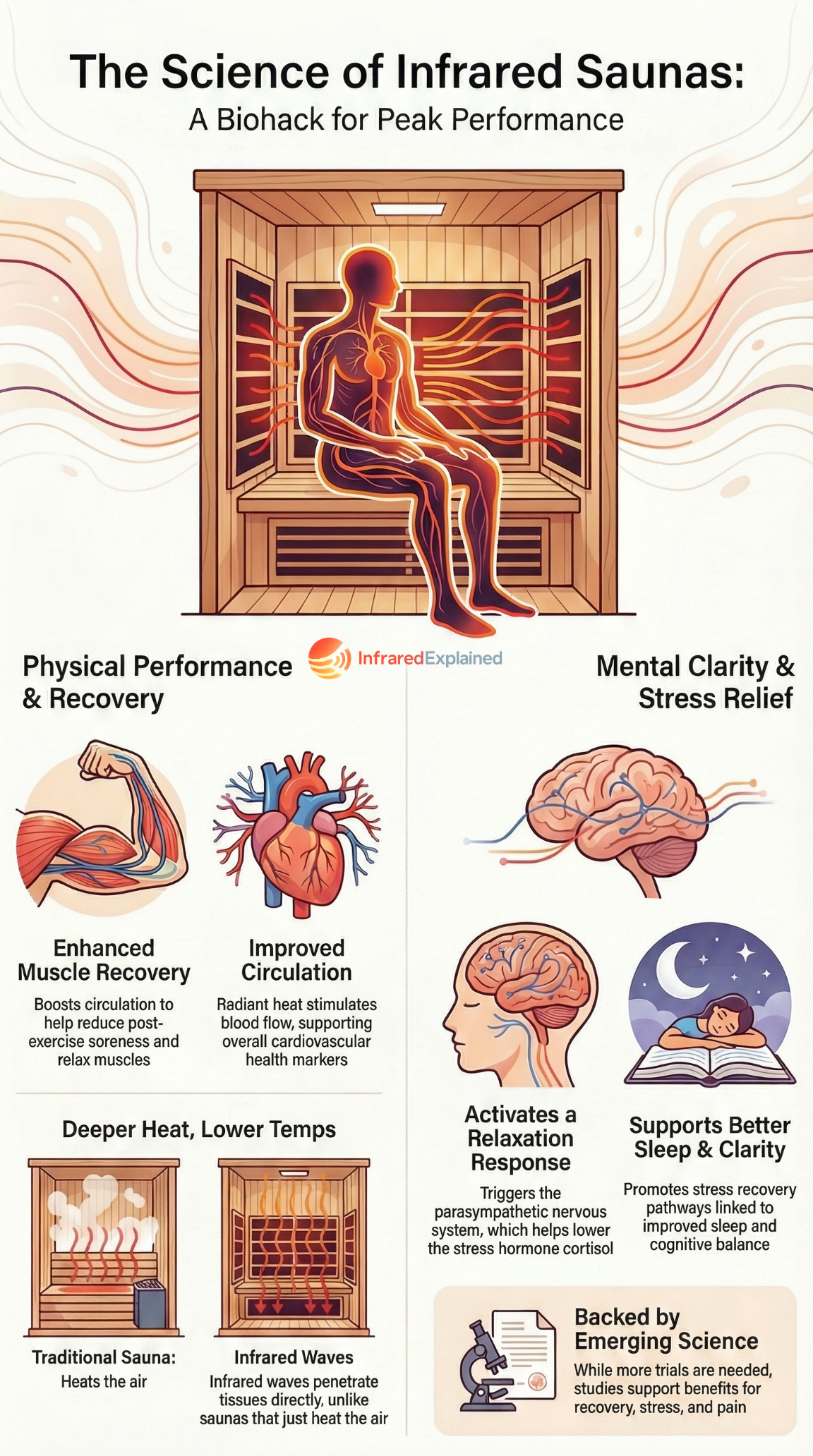
This post breaks down why infrared saunas are capturing the attention of the biohacking community and high-performance individuals, diving into both scientific evidence and practical lifestyle applications.
Table of Contents
Chapter 1: How Infrared Saunas Heat the Body and Why It Matters
To understand why infrared saunas are becoming a popular biohack among high performers, the first step is to grasp how they heat the body differently from traditional saunas.
1. Radiant Heat vs. Air Heat
Infrared saunas use infrared light to heat your body directly, rather than heating the air around you first. Traditional saunas rely on heaters and hot surfaces to raise the ambient temperature, which then warms your body through hot air and steam. Infrared saunas instead emit radiant infrared waves that your skin absorbs as heat. This radiant heat is felt inside the body, not just on the surface, allowing deep warmth at lower air temperatures than in traditional saunas.
Because of this radiant heat delivery, infrared sauna cabins often run at temperatures between roughly 120°F and 145°F. In comparison, traditional saunas can operate much hotter, usually above 150°F.
2. Why Lower Ambient Temperature Matters
The lower air temperature in an infrared sauna makes the experience more comfortable and tolerable, especially for sustained sessions. This is an essential advantage for people who want regular exposure to heat without feeling overwhelmed by extreme heat. Users often report they can stay inside a far infrared sauna longer and with less discomfort.
This comfort factor dramatically increases usability for people with busy routines or those experimenting with daily or near-daily biohacking heat therapy.
3. Deeper Tissue Penetration
Infrared waves penetrate the skin more effectively than simple hot air. This means the body’s tissues absorb heat more deeply at the cellular level, which may enhance circulation and promote sweating even at lower cabin temperatures. In infrared models, heat reaches deeper tissues and muscles more directly than in traditional saunas, which rely on surface-level warming.
Because of this direct heat absorption, many people feel heat deeper in the body rather than just on the skin surface. This deeper effect is part of the reason why infrared saunas are often recommended as a recovery or detox support tool.
4. Variations in Infrared Wavelengths
Infrared light includes a range of wavelengths that affect the body differently. Some types of infrared, such as far-infrared radiation, are used in sauna panels because they penetrate deeper into tissues and at warm the body with less ambient heat.
This range of infrared wavelengths is part of what allows full-spectrum infrared saunas to claim broader wellness effects: by combining near-, mid, and far-infrared waves, they aim to deliver heat that can affect the skin, muscles, and deeper tissues all at once.
Chapter 2: Recovery Benefits That Appeal to High Performers
For high performers, whether elite athletes, busy professionals, or dedicated biohackers, recovery isn’t optional; it’s essential. Without adequate recovery, training gains stall, injury risk rises, stress accumulates, and performance plateaus. That’s where infrared saunas come in as a practical tool to support faster recovery and improved readiness for the next challenge.
1. Faster Muscle Recovery After Exercise
One of the most compelling reasons infrared saunas are popular among high performers is their potential to support recovery after intense training sessions or workouts. Research shows that using an infrared sauna after exercise can:
-
Reduce muscle soreness
-
Maintain explosive performance measures
-
Improve perceived recovery compared to passive rest
A controlled study found that athletes who used an infrared sauna after resistance exercise experienced less severe muscle soreness and better neuromuscular performance than those who rested, suggesting infrared heat may help the body recover more effectively after training.
2. Reduced Muscle Soreness and Fatigue
Beyond performance tests, infrared sauna sessions are often associated with reduced soreness and faster recovery from muscle fatigue. The heat helps increase blood flow to tired tissues, bringing oxygen and nutrients that support healing processes. Greater circulation also correlates with reduced inflammation, a key factor in delayed-onset muscle soreness (DOMS).
3. Enhanced Circulation and Oxygen Delivery
When your body is exposed to infrared heat, blood vessels expand and circulation increases. This physiologic response is similar to what happens during moderate exercise and can help flush metabolic waste products from muscle tissue while bringing in fresh, oxygen-rich blood. Increasing circulation this way supports not just localized recovery but whole-body resilience—an appealing benefit for anyone training hard or performing often.
4. Anti-Inflammatory Effects
Inflammation is a natural part of the training process, but chronic or excessive inflammation can slow recovery and hinder performance. The heat stress from infrared sessions can trigger biological pathways that moderate inflammatory responses, helping high performers balance training intensity with sustainable physical adaptation.
5. Pain Relief and Comfort
Infrared sauna use has also been associated with temporary pain relief and comfort, especially in muscles and joints. By relaxing tight muscle fibers and increasing blood flow, heat therapy provides a soothing effect that can reduce discomfort after intense activity.
6. Practical Support for Busy Schedules
What makes infrared sauna recovery especially appealing to high performers is convenience. Unlike some recovery methods that require specialized facilities or time-intensive protocols, a 20- to 30-minute infrared session at home can serve as a recovery tool that fits into a daily routine. Regular, manageable sessions make it easier to be consistent, which is where actual performance gains happen.
Chapter 3: Stress Reduction, Mental Clarity, and Daily Optimization
High performers often juggle packed schedules, tight deadlines, persistent stress, and constant stimulation from screens and notifications. In this environment, tools that support mental calm, stress resilience, and focus become highly desirable. That’s where infrared saunas step in as a practical biohack—not just for the body, but for the mind.
1. Activating the Body’s Relaxation Mode
One of the key ways infrared saunas support stress reduction is by stimulating the parasympathetic nervous system, the branch of the autonomic nervous system responsible for “rest, digest, and recover.” When this system activates, the body shifts away from fight-or-flight mode, allowing muscles to relax, heart rate to slow, and the mind to quiet down. Regular sauna sessions have been shown to encourage this physiological shift, helping your body reset after a long day.
2. Lowering Cortisol and Promoting Calm
Cortisol is the body’s main stress hormone, released in response to physical or psychological stress. Chronic high cortisol levels are linked with anxiety, fatigue, disrupted sleep, and impaired focus.
Infrared sauna use appears to help balance cortisol levels, reducing the chronic hormonal stress response and helping users feel calmer and more grounded after a session. Lower cortisol also supports more profound relaxation and can make transitions into sleep easier.
3. Neurochemical Boosts for Mood and Clarity
Heat exposure can trigger the release of endorphins, the body’s “feel-good” hormones that promote sensations of happiness and well-being. This neurochemical response may help alleviate mild feelings of stress and anxiety. Paired with the quiet, contemplative environment of an infrared session, many users report improved mental clarity, focus, and creative thinking after spending time in the sauna.
4. Better Sleep Quality and Circadian Support
Sleep is foundational to mental performance, resilience, and recovery. Winding down before bed can be challenging in a busy life, especially when stress keeps the mind racing.
Infrared sauna sessions can improve sleep quality by promoting relaxation and reducing stress hormones that interfere with sleep onset. Many regular users report falling asleep faster and experiencing more restful, restorative sleep after consistent infrared sauna use.
5. A Space for Mindful Rest and Reset
Beyond the direct physiological effects, an infrared sauna creates a quiet, intentional space for unwinding. The warm, low-stimulus environment encourages deep breathing, mindfulness, and mental rest—making it a valuable tool for those who struggle to disconnect from stressors on their own.
6. Daily Optimization Through Routine
What makes infrared saunas especially appealing to high performers is not just occasional relaxation, but the ability to integrate sessions into a regular wellness habit. Whether it’s a morning session to wake up the body and mind, a midday break to clear stress, or an evening routine to support sleep, consistent sauna use becomes a daily optimization tool—helping users reset their minds and bodies as part of a broader biohacking lifestyle.
Chapter 4: Real-World Biohacking Integration and Trends
Infrared saunas aren’t used in isolation anymore. In 2025 and beyond, they’re part of broader biohacking practices, recovery stacks, and at-home wellness systems that high performers adopt to optimize physical and mental well-being. From combining heat therapy with cold immersion to integrating light-based therapies and data-driven tracking, these trends show how infrared saunas are evolving beyond solo tools into key elements of modern personalized wellness routines.
1. Contrast Therapy and Multi-Modality Protocols
One major trend in wellness right now is contrast therapy, which alternates heat and cold exposure to stimulate circulation, modulate stress responses, and support recovery. Cold plunges and ice baths are often paired with sauna sessions to create a temperature cycling effect that biohackers believe enhances cardiovascular function and nervous system adaptation. This is a key reason infrared saunas are often placed alongside cold immersion tools in home setups or integrated into recovery spaces in wellness centers.
Beyond contrast therapy, infrared saunas are being combined with complementary modalities like red light therapy, chromotherapy (colored light therapy), and pulsed electromagnetic field (PEMF) therapy to create broader wellness stacks. These combinations aim to amplify cellular responses to heat, support tissue repair, and boost recovery outcomes.
2. At-Home Wellness Hubs and Personal Biohack Stations
The shift toward at-home personalized wellness systems is accelerating. People now install infrared saunas in homes as part of a dedicated biohacking corner that may include cold plunge tubs, wearable trackers, and light-based therapy devices. Infrared saunas are no longer luxury add-ons; they’re becoming central features in wellness-conscious households. Searches and installations have increased significantly, indicating growing demand for self-directed recovery and performance tools that don’t require gym memberships or spa visits.
3. Integrating Technology and Biofeedback
Technology is enhancing how users interact with their wellness tools. Fitness wearables, smart rings, and biometric trackers provide real-time data on sleep quality, heart rate variability, and recovery status, enabling individuals to tailor their infrared sauna use. This data-driven approach means sauna sessions can be timed for maximum benefit, such as using heat after tracking high activity days or scheduling sessions to support sleep when stress biomarkers are elevated.
4. Wellness Clubs and Community Biohacking Experiences
Sauna culture isn’t just a home phenomenon. Wellness-focused clubs and biohacking labs now offer group sessions that combine infrared saunas with other modalities such as ice baths aka cold plunges, breathwork, and guided recovery protocols. These community experiences help users adopt targeted routines that prioritize both individual performance and social engagement, tapping into a growing trend of shared self-care practices.
5. Mainstreaming Biohacking Concepts
Biohacking is no longer fringe. Everyday routines now include infrared sauna sessions alongside other approaches such as optimized sleep routines, nutrition experiments, and light therapy. As more high performers and wellness enthusiasts adopt these practices, infrared saunas are becoming recognized as essential components in holistic biohacking stacks, whether in private homes or dedicated wellness spaces.
Summary
Infrared saunas have rapidly grown from niche wellness tools into central elements of the modern biohacking lifestyle, especially among high performers, athletes, and wellness-minded individuals. Unlike traditional saunas that heat the air around you, infrared saunas use direct radiant infrared light to warm the body at lower temperatures, making sessions more comfortable while still promoting profound heat effects. This unique method of heat delivery supports enhanced circulation, muscle recovery, pain relief, and stress regulation, making it appealing for daily recovery and performance optimization. Regular sessions also activate the parasympathetic nervous system, encouraging relaxation, lower cortisol levels, and improved sleep quality, all of which contribute to mental clarity and resilience. In real-world practices, infrared saunas are now part of broader biohacking routines that include contrast therapy, wearable tracking, and integrated wellness setups at home, highlighting their versatility and growing popularity as accessible tools for physical and mental optimization. Their combination of convenience, comfort, and potential health support is why infrared saunas are becoming go-to biohacks for people seeking consistent wellness benefits as part of a high-performance lifestyle.

Gabriel H.
Author & Founder of InfraredExplained
Lifetime BioHacker
1. What makes infrared saunas different from traditional saunas?
Infrared saunas heat your body using infrared light rather than heating the air around you, allowing deeper heat penetration at lower air temperatures. This can feel more comfortable while producing strong heat therapy effects.
2. Can infrared saunas actually help with exercise recovery?
Yes. Studies show that post-exercise infrared sauna sessions can reduce muscle soreness and improve perceived recovery, supporting faster return to training.
3. How often should I use an infrared sauna for best results?
Many users start with 3–5 sessions per week and adjust based on comfort and goals. Some build up to daily sessions with acclimation.
4. How long should a typical infrared sauna session last?
Begin with 10–20 minutes, then gradually increase to 30–40 minutes as your body adapts. Always listen to your body and stay hydrated.
5. Will I sweat as much in an infrared sauna as in a traditional sauna?
Yes. Even at lower temperatures, infrared heat penetrates deeper into the body and can stimulate sweating comparable to traditional saunas.
6. Can infrared saunas help with stress relief and relaxation?
Many users report reduced stress and enhanced relaxation after sessions, likely due to heat exposure helping the body enter rest-and-digest mode and support mental calm.
7. Should I stay hydrated before and after my infrared sauna session?
Absolutely. Hydration is essential because sweating increases fluid loss. Drinking water before, during, and after your session helps maintain performance and comfort.
8. Can infrared saunas support skin health and circulation?
Infrared heat increases blood flow, which can improve nutrient delivery to skin and support detoxification through sweating, potentially enhancing skin tone and texture.
9. Are infrared saunas safe for most people?
Infrared sauna use is generally safe for healthy individuals when guidelines are followed, but consult a healthcare provider if you have heart issues, blood pressure concerns, are pregnant, or have other medical conditions.
10. Can I bring electronic devices into an infrared sauna?
Yes. Because infrared saunas operate at lower temperatures than steam or traditional saunas, most devices like phones can safely tolerate the environment.
References
- Ahokas, E. K., Ihalainen, J. K., Hanstock, H. G., Savolainen, E., & Kyröläinen, H. (2022). A post-exercise infrared sauna session improves recovery of neuromuscular performance and muscle soreness after resistance exercise training. PubMed Central.
- Biohackers.World. (2025, April 17). Biohacking with traditional, infrared and steam saunas.
- High Tech Health International. (2024, October 29). What is the healthiest sauna?
- Mayoclinic.org. (2025). Do infrared saunas have any health benefits?
- Salus Saunas. (2025, May 8). Why saunas are an effective tool for lowering stress hormones.
- Salus Saunas. (2025, October 20). The anti-inflammatory benefits of infrared sauna sessions.
- Salus Saunas. (2025, March 13). The science of sauna biohacking.
- Timeline. (2024, January 18). Biohacking with heat: 6 benefits of sauna, proven by science.
- Taylordukeswellness.com. (n.d.). Infrared sauna 101: What it is, what it benefits how to use it.
- The Independent. (2025, July 31). All the benefits of infrared saunas, from improved ….
- Wikipedia. (2025). Infrared sauna.
- WebMD. (2024, October 22). Health benefits of infrared saunas.